Contents
01
What Is the Aesthetic Medicine Industry Focusing On?
DateFebruary 2026
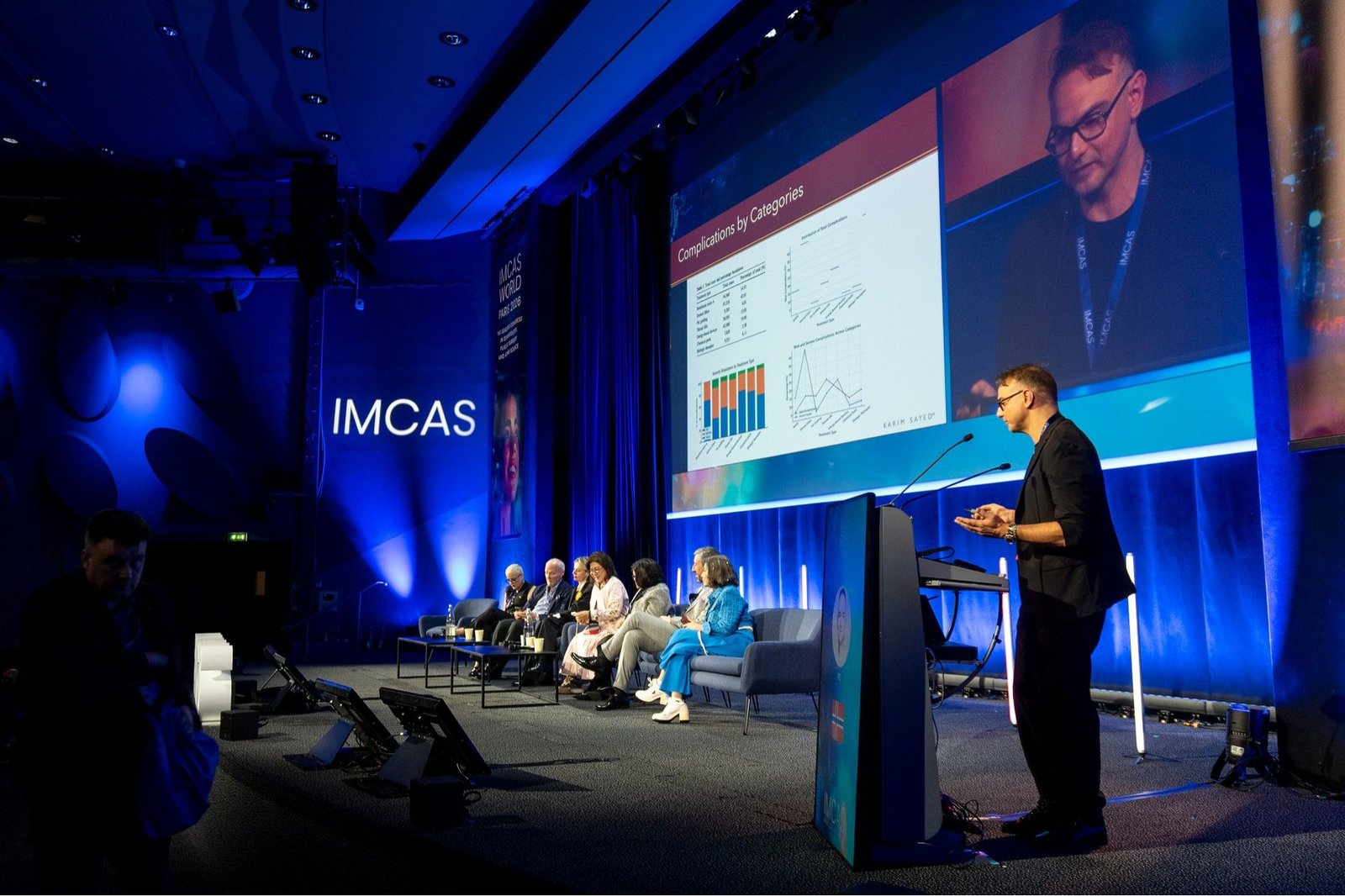
ConferenceIMCAS World Congress 2026
At IMCAS World Congress 2026, one of the strongest trends emerging from the conference was the transition toward precision, safety, and evidence-based aesthetic medicine.
As aesthetic treatments continue to evolve, clinicians are increasingly moving beyond traditional experience-based approaches and adopting technologies that enable better anatomical understanding, treatment planning, and long-term patient management.
The congress highlighted several important directions shaping the future of aesthetic medicine, including facial anatomy, regenerative approaches, artificial intelligence, and ultrasound-guided procedures.
02
Insight 1: From Blind Injection to Precision-Guided Treatment
For many years, aesthetic injection procedures relied heavily on anatomical knowledge, clinical experience, and manual assessment.
However, increasing awareness of vascular complications and anatomical variations is driving the industry toward more precise approaches.
During IMCAS World Congress 2026, ultrasound in aesthetics received increasing attention, with dedicated sessions covering:
- Facial ultrasound fundamentals
- Ultrasound-based anatomical assessment
- Ultrasound-guided injections
- Filler-related complication management
The integration of real-time imaging is becoming an important tool for improving injection safety and treatment accuracy.
03
Insight 2: Facial Anatomy Becomes the Foundation of Modern Aesthetics
The future of aesthetic medicine is increasingly built on a deeper understanding of facial anatomy.
Rather than treating isolated wrinkles or volume loss, clinicians are focusing on:
- Facial structural changes
- Soft tissue layers
- Vascular anatomy
- Muscle dynamics
- Aging-related tissue remodeling
Advanced anatomical evaluation helps physicians design more personalized treatment strategies and achieve more natural aesthetic outcomes.
04
Insight 3: The Rise of Regenerative and Longevity-Focused Aesthetics
Another important trend at IMCAS World Congress 2026 was the growing interest in regenerative aesthetics.
The industry is gradually shifting from simply restoring volume toward improving overall tissue quality.
Emerging approaches focus on:
- Collagen stimulation
- Skin quality improvement
- Tissue regeneration
- Long-term aging management
This reflects a broader transformation in aesthetic medicine—from short-term correction toward sustainable rejuvenation.
05
Insight 4: AI and Digital Technologies Are Reshaping Clinical Practice
Artificial intelligence and digital technologies are becoming increasingly important in aesthetic medicine.
Future applications may include:
- AI-assisted image analysis
- Digital patient assessment
- Intelligent treatment planning
- Clinical decision support
With the development of medical imaging technologies, AI has the potential to transform aesthetic medicine from subjective evaluation toward more objective and data-driven approaches.
06
Insight 5: Ultrasound Becomes a Key Technology for Safer Aesthetic Medicine
One of the notable highlights of IMCAS World Congress 2026 was the growing role of ultrasound education in aesthetic practice.
Ultrasound provides clinicians with the ability to visualize:
- Facial tissue layers
- Blood vessel locations
- Previous filler deposits
- Injection depth and distribution
This capability supports safer procedures, improved complication management, and more accurate treatment planning.
As aesthetic medicine becomes increasingly sophisticated, ultrasound is expected to become an essential clinical tool connecting anatomy, safety, and precision treatment.
07
Conclusion & Source
Conclusion
IMCAS World Congress 2026 demonstrated that aesthetic medicine is entering a new stage of development.
The future direction is no longer only about improving appearance, but about achieving:
- Better visualization
- Greater precision
- Higher safety
- More personalized outcomes
With the integration of ultrasound imaging, artificial intelligence, and regenerative concepts, aesthetic medicine is moving toward a more scientific and technology-driven future.
Source
- IMCAS World Congress 2026 Official Program — https://www.imcas.com/en/